
Supreme Court Clarifies Standards for Section 307 IPC in Sivamani v. State
Category: Criminal Law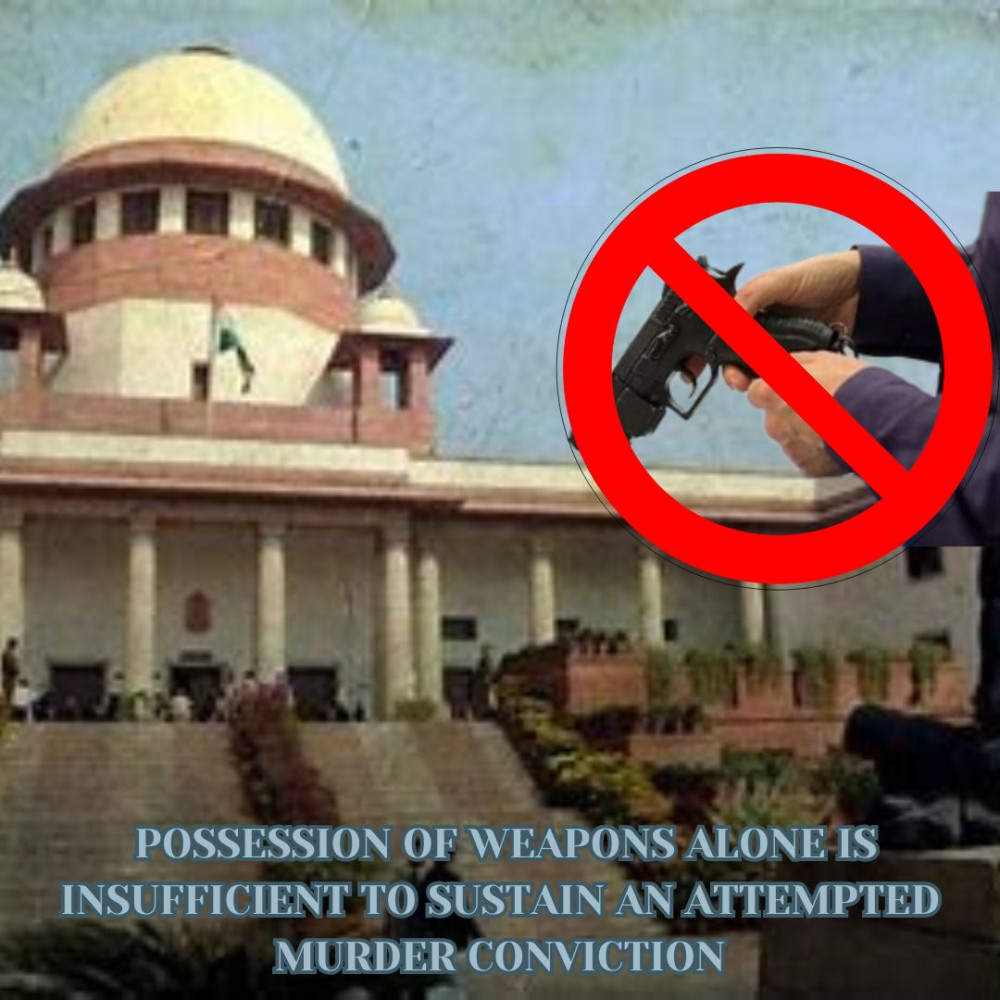
「 ✦ Content ✦ 」
Sivamani and Anr. v. State represented by Inspector of Police.
Case No.: Criminal Appeal No. 3619 of 2023.
Date: November 28, 2023.
Court: Supreme Court of India.
Quorum: Hon’ble J. Vikram Nath, J. Ahsanussin Amanullah.
Facts of the Case:
The appellants (Sivamani and Dinesh Kumar) were convicted under Section 307 of the Indian Penal Code (IPC) for attempted murder by the trial court. They were sentenced to 10 years of rigorous imprisonment and fined Rs. 1000 each. On appeal, the High Court of Judicature at Madras confirmed the conviction but reduced the sentence to 5 years of rigorous imprisonment. The appellants then appealed to the Supreme Court.
The case arose from a dispute between the complainant (PW1) and Accused No. 1 over a lane between their houses. On September 15, 2012, the appellants, along with other accused, allegedly attacked PW1 at his grocery shop. The appellants reportedly tried to attack PW1 with knives, but he escaped with minor injuries. PW2 (PW1's mother) was also allegedly attacked when she came to her son's rescue.
Legal Issues:
1. Whether the conviction under Section 307 IPC (attempt to murder) was justified given the nature of injuries sustained by the victims?
2. Whether the intention to kill was sufficiently established to warrant a conviction under Section 307 IPC?
Legal Provisions:
1. Section 307 of the Indian Penal Code (Attempt to murder)
2. Sections 323 and 324 of the Indian Penal Code (Voluntarily causing hurt and voluntarily causing hurt by dangerous weapons or means)
Contentions of Petitioners (Appellants):
The injuries sustained by the victims were simple in nature and not on vital body parts. There was no clear intention to kill, as evidenced by the lack of repeated blows and pre-planning. If the appellants had intended to kill, they could have easily done so when the complainant was alone. The case at most warranted charges under Sections 323 and 324 IPC, not Section 307.
Contentions of Respondents (State):
The appellants being armed with knives clearly indicated their intention to kill, and it was only by chance that the victims' lives were saved.
Judgment and Analysis:
The Supreme Court allowed the appeal and modified the conviction from Section 307 to Sections 323 and 324 of the IPC. The sentence was reduced to the period already undergone, while the fine was maintained.
The Court relied on previous judgments (State of Madhya Pradesh v. Saleem, Jage Ram v. State of Haryana, and State of Madhya Pradesh v. Kanha) to emphasize that while grievous injury is not necessary for a conviction under Section 307, the intention of the accused can be ascertained from the actual injury and surrounding circumstances.
The Court found that there was no allegation of repeated or severe blows, and the injuries on PW1 and PW2 were simple in nature. These factors weighed in favor of the appellants. The Court agreed with the appellants' submission that only offenses under Sections 323 and 324 of the IPC could be made out based on the available evidence.
Conclusion:
The Supreme Court's decision highlights the importance of carefully examining the nature of injuries and the surrounding circumstances when determining the appropriate charges in cases of assault. While the possession of weapons can indicate intent, it is not sufficient on its own to sustain a conviction for attempted murder. This judgment emphasizes the need for a balanced approach in interpreting Section 307 IPC, ensuring that convictions under this serious charge are supported by clear evidence of intent to cause death.
Written by Advocate Anik.
OLQ is a Pan-India basis law firm connecting legal expertise nationwide.


