
SC REVIEWS SUBSISTENCE ALLOWANCES, POLLUTION, AND WASTE MANAGEMENT IN NCR
Category: Environmental Law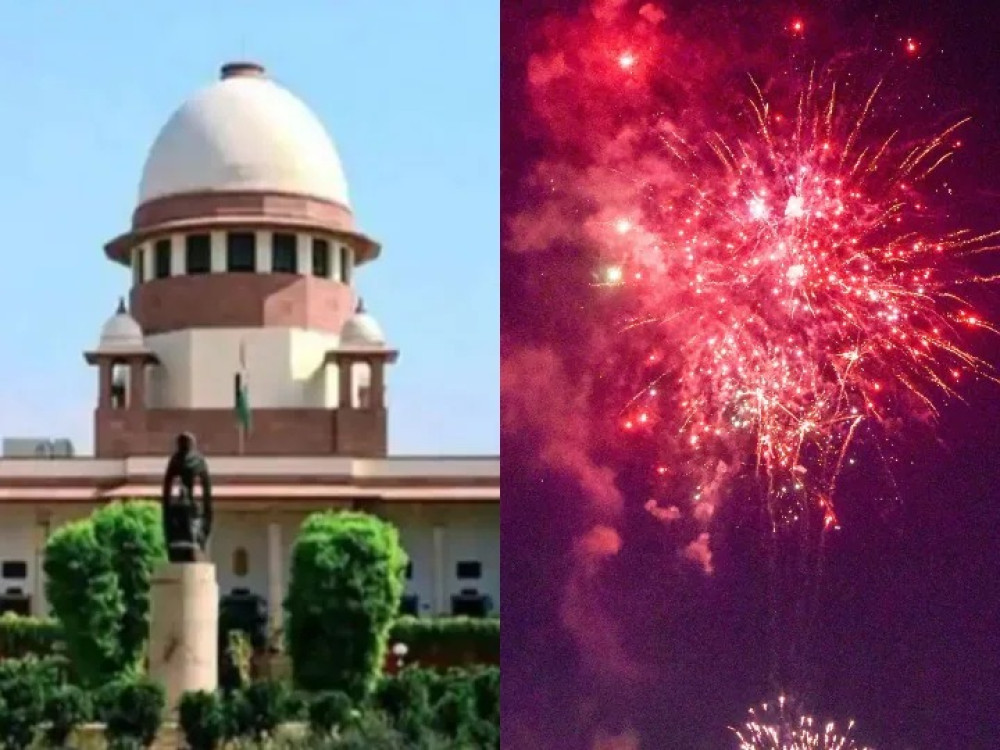
「 ✦ Content ✦ 」
INTRODUCTION
The Supreme Court of India has reaffirmed its stand on controlling firecrackers in curbing environmental pollution and other hazards it creates. The court, in a landmark move, has insisted on an enhanced prohibition of specific firecrackers by pointing out how these firecrackers also result in air and noise pollution at times of festivals, mainly the festival of Diwali.
BACKGROUND
This is based on increasing fears about air and noise pollution through firecrackers, especially during Diwali. In 2017, the Supreme Court had prohibited the sale of firecrackers in Delhi-NCR as air quality was deteriorating. In a bid to strike a balance between cultural traditions and environmental concerns, the Court permitted "green crackers" in 2018, which cause less pollution. But due to widespread non-compliance and use of harmful crackers, contempt petitions have been filed. The recent move by the Court is to crack down further on its orders towards addressing risks of pollution and public health risks especially in highly exposed urban centers.
The later proceedings follow a December 5 court order that allowed the relaxation of GRAP Stage IV restrictions to Level II due to improved AQI levels. The court ordered that Stage III measures be reimposed if the AQI exceeds 350 and Stage IV measures be reinstated if it exceeds 400. The court today allowed the implementation of a revised GRAP II, with certain GRAP Stage III measures, such as increased street sweeping and watering.
KEY POINTS
Environment and health concerns: The case presented argues that the severe air is having adverse effect on environment and health due to the bursting of fire crackers in the metropolitan areas
Previous Order: The SC emphasized on the previous orders which laid down the restrictions on the use of harmful chemicals in the crackers and also suggested the promotion of green crackers.
Curb on Noise Pollution: The court highlighted that not only the quality of air but the excessive noise pollution also has an adverse effect.
Sustainability in question: the main aim is to focus on environmental goals which includes prevention of pollution and tackle climate change
RECENT DEVELOPMENTS
The Supreme Court ordered the NCR states to guarantee subsistence allowance payments to construction workers affected by restrictions under GRAP-IV from November 18 to December 5, 2024. The Delhi administration has made payments to 90,000 workers of ₹8,000 each and is actively registering other workers. The Court underscored ascertaining the exact number of affected workers and ordered state governments to file compliance affidavits by January 3, 2025. The Chief Secretaries were called earlier over defaults and since then, things have been moving, and Uttar Pradesh has paid 4.88 lakh workers, Haryana 1 lakh, and Rajasthan has also paid.
The Court also elaborated on failures in the implementation of Solid Waste Management Rules, 2016, and GRAP measures also pointing out failures like burning garbage at Gurgaon. States of NCR were directed to give nodal officers for this purpose so that the judges commissioners can inspect the same, the bench further emphasized executing the 2022 policy of CAQM on controlling pollution in the air. It is further adjourned for December 19, 2024.
CONCLUSION
The Apex court decision signifies the similar situation that is being faced every year and it has been previously proposed that all the aspects of the air pollution shall be considered and there should be permanent situation to this.
The case highlights the lack of coordination among the various stakeholders in implementing the restrictions on behalf of the Delhi government, Police, Municipal Corporation of Delhi and Pollution control committee.
OLQ is a Pan-India basis law firm connecting legal expertise nationwide.
WRITTEN BY: ADV AYANTIKA MONDAL


