
LAWS GOVERNING PROTECTION OF WOMEN AND CHILD RIGHTS IN INDIA
Category: Constitutional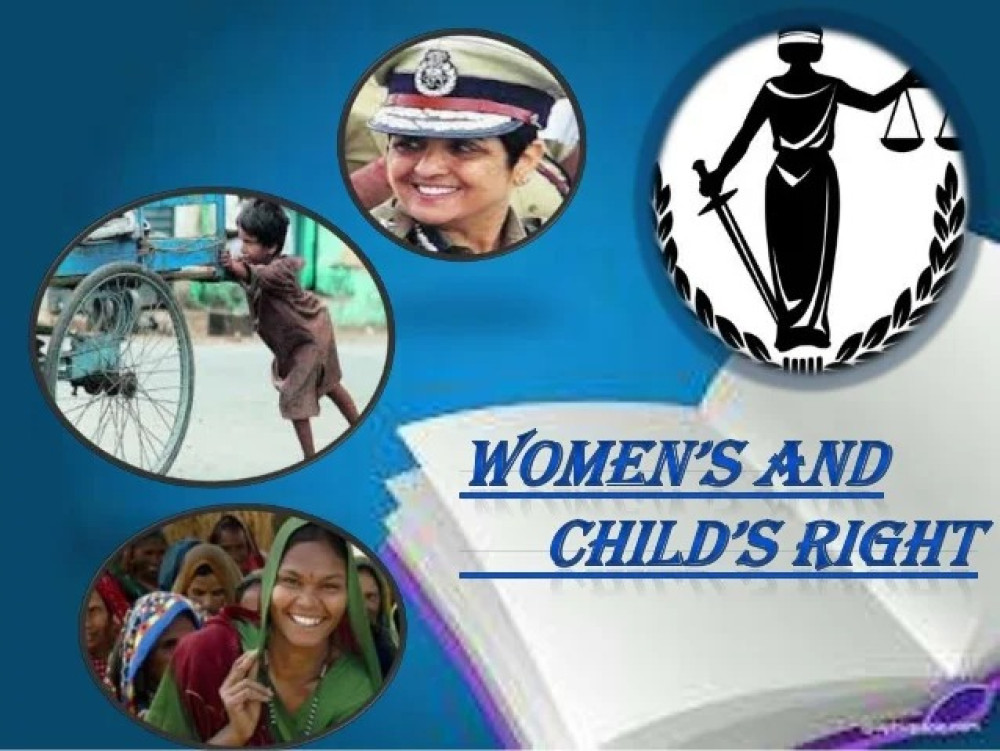
「 ✦ Content ✦ 」
ABSTRACT
The responsibility for maintaining law and order and ensuring the safety of citizens, including women and children, is with the State Governments in India. The Constitution of India lists ‘Police’ and ‘Public Order’ as a State subjects,, meaning State Governments are in charge of handling these problems
The Ministry of Women and Child Development drafts several laws designed to protect women, such as the Protection of Women from Domestic Violence Act, 2005, the Dowry Prohibition Act, 1961, the Indecent Representation of Women (Prohibition) Act, 1986, the Sexual Harassment of Women at Workplace (Prevention, Prohibition and Redressal) Act, 2013, and the Prohibition of Child Marriage Act, 2006. Additionally, laws like the Juvenile Justice (Care and Protection) Act, 2015, the Protection of Children from Sexual Offences (POCSO) Act, 2012, and the Commissions for Protection of Child Rights (CPCR) Act, 2005, have been drafted to safeguard children's rights.
The Juvenile Justice Act make sure that children in need of care and protection. The POCSO Act addresses various forms of child sexual abuse and provides strong penalties, along with child-friendly procedures for trials and mandatory reporting of such crimes. The Right to Education (RTE) Act, 2009 promotes free and compulsory education for children
To enhance the safety of women, the Government of India has formed Nirbhaya Fund Framework. The Ministry of Women and Child Development also promotes many programs under this framework, including Women Helpline, and the Mahila Police Volunteers scheme.
Additionally, the Ministry has introduced many schemes to reduce gender-related problems. The Pradhan Mantri Matru Vandana Yojana offers cash benefits to improve the health and nutrition of pregnant and lactating women. The Beti Bachao Beti Padhao program aims to address the child sex ratio and empower girls and women through effort by the Ministries of Health, Family Welfare, and Human Resource Development.
KEYWORDS
WOMEN’S RIGHTS, CHILDREN’S RIGHTs, PROTECTION LAWS, SAFETY AND SECURITY, DOMESTIC VIOLENCE, JUVENILE JUSTICE, HUMAN TRAFFICKING, DOMESTIC VIOLENCE, CHILD MARRIAGE, GENDER DISPARITIES, CHILD LABOUR, HUMAN TRAFFICKING, CHILD PROTECTION, SOCIAL JUSTICE, EQUALITY, CHILD TRAFFICKING, GENDER EQUALITY, LEGAL AID, MATERNITY RELIEF, STATE RESPONSIBILITY
INTRODUCTION
In India, the safety and rights of women and children are given importance by the government. The Constitution of India also provides protection for women and children, promoting equalit. Key provisions aim to promote their welfare by giving equal opportunities and protection from exploitation. Special laws have been drafted to address issues like child labour, human trafficking, and domestic violence.1.
CONSTITUTION AND PROTECTION OF WOMEN’S RIGHTS
The Constitution of India not only guarantees equality for women but also address the socio-economic, educational, and political disadvantages they go through. Fundamental Rights, some Articles ensure equality before the law, equal protection under the law, prohibit discrimination based on religion, race, caste, sex, or place of birth, and guarantee equal opportunity for all citizens in employment related matters.2.
Constitutional Rights and Protections
Equality before the law for women (Article 14)
The State must not discriminate against any citizen on grounds such as religion, race, caste, sex, or place of birth (Article 15(1))
The State is allowed to create provisions specifically for women and children (Article 15(3))
Equality of opportunity in employment or appointment to any office under the State for all citizens (Article 16)
The State must aim to ensure both men and women have equal rights to an adequate means of livelihood (Article 39(a)); and equal pay for equal work for both men and women (Article 39(d))
The State is responsible for ensuring just and humane working conditions and providing maternity relief (Article 42)
The State must actively support the educational and economic interests of weaker sections of society, and protect them from social injustice and exploitation (Article 46)
The State must raise the nutritional level and improve the standard of living for its people (Article 47)
The State must promote unity and brotherhood among all citizens and discourage practices that undermine the dignity of women (Article 51(A)(e))
At least one-third of the seats in Panchayats must be reserved for women, with rotational allotment of seats (Article 243 D(3))
At least one-third of the positions of Chairpersons in Panchayats must be reserved for women (Article 243 D(4))
At least one-third of the seats in Municipalities must be reserved for women, with seats allocated by rotation (Article 243 T(3))
Crimes Under Special Laws (SLL)
(i) The Employees State Insurance Act, 1948
(ii) The Plantation Labour Act, 1951
(iii) The Family Courts Act, 1954
(iv) The Special Marriage Act, 1954
(v) The Hindu Marriage Act, 1955
(vi) The Hindu Succession Act, 1956 (amended in 2005)
(vii) The Immoral Traffic (Prevention) Act, 1956
(viii) The Maternity Benefit Act, 1961 (amended in 1995)
(ix) The Dowry Prohibition Act, 1961
(x) The Medical Termination of Pregnancy Act, 1971
(xi) The Contract Labour (Regulation and Abolition) Act, 1976
(xii) The Equal Remuneration Act, 1976
(xiii) The Prohibition of Child Marriage Act, 2006
(xiv) The Criminal Law (Amendment) Act, 1983
(xv) The Factories (Amendment) Act, 1986
(xvi) The Indecent Representation of Women (Prohibition) Act, 1986
(xvii) The Commission of Sati (Prevention) Act, 1987
(xviii) The Protection of Women from Domestic Violence Act, 2005. 3.
CONSTITUTION AND PROTECTION OF CHILD RIGHTS
Article 14 - Right to Equality
This article make sure that all citizens, including children, are treated equally before the law and have equal protection under the law.
Article 15(3) - Right Against Discrimination
Article 15(3) allows the State to make special laws for the benefit and protection of women and children.
Article 21 - Right to Personal Liberty and Due Process
This article guarantees a person’s right to life, freedom, and fair legal procedures. For children, this includes the right to proper food and shelter
Article 21A - Right to Education
This article makes it a fundamental right for all children aged 6 to 14 to receive free and compulsory education. The 86th Amendment Act of 2002 established education as a basic right. This law was a massive step toward ensuring that every child in India has access to education.
Article 23 - Prohibition of Human Trafficking and Forced Labour
This article bans human trafficking and forced labour. It specifically prohibits the trafficking of children, which can lead to child exploitation, sexual abuse, and forced labour.
Article 24 - Prohibition of Child Labour
This article bans the employment of children under 14 in factories, mines, or other dangerous jobs. Child labour is harmful to children’s physical and emotional health.
Children’s rights under Directive Principles of State Policy.
Article 39(e)
This article ensures that no one, especially children, should be forced to work beyond their physical or mental abilities
Article 39(f)
The State is responsible for creating laws and policies that provide children with the resources and opportunities needed for their healthy, free, and dignified development
Article 46
The State must promote the educational and economic interests of the most vulnerable groups in society, particularly children.
Article 47
The State has a duty to improve the living standards, nutrition, and public health of its citizens, with a particular focus on children.
VITAL CASE LAWS
In the case of M.C. Mehta v. State of Tamil Nadu (1991), the Supreme Court stated that all children under 14 should have access to free education.
In the case Gaurav Jain v. Union of India (1996), the Supreme Court ruled that children whose parents work in prostitution should not be isolated or treated differently.
In Vishal Jeet v. Union of India (1990), the Supreme Court ordered the government to stop the sexual exploitation of children and establish rehabilitation centers for victims.
In U.P. Bandhua Mukti Morcha v. Union of India (1984), the Court ruled that the government must act under the Bonded Labour System Act of 1976 to prevent violations of Article 23.
In Kishan Pattnayak v. State of Orissa (1996), the Supreme Court ordered the government to take action to address the severe poverty and hunger in Kalahandi, Orissa, where many children were dying from starvation
In the cases Mohini Jain v. State of Karnataka (1992) and Unnikrishnan v. State of Andhra Pradesh (1993), the Supreme Court ruled that education should be a fundamental right 5.
CONCLUSION
In India, the safety and rights of women and children are a top priority for the government. Both state and central governments work together to create laws and policies to protect them from harm and ensure their well-being. The Constitution of India provides strong legal protections for women and children, ensuring equality and opportunities for growth and development.
To improve the lives of women and children, the government has launched numerous programs and initiatives, such as the Nirbhaya Fund, the Beti Bachao Beti Padhao program, and schemes for maternal health and child protection. These efforts aim to reduce gender disparities and ensure that women and children live in a safe, supportive environment where they can thrive.
The government continues to focus on creating societal awareness, promoting education, and addressing the root causes of exploitation. Through legal provisions, policies, and awareness campaigns, India make sure to ensure that every woman and child has the right to live with dignity, equality, and freedom from violence or exploitation. The collective efforts of the state, central governments, and society are essential in achieving this vision and upholding the fundamental rights of women and children.
OLQ is a Pan-India basis law firm connecting legal expertise nationwide.
WRITTEN BY: ADV AYANTIKA MONDAL


