
INTEGRATION OF ARTIFICIAL INTELLIGENCE WITH AGRICULTURE IN INDIA
Category: ARTICLE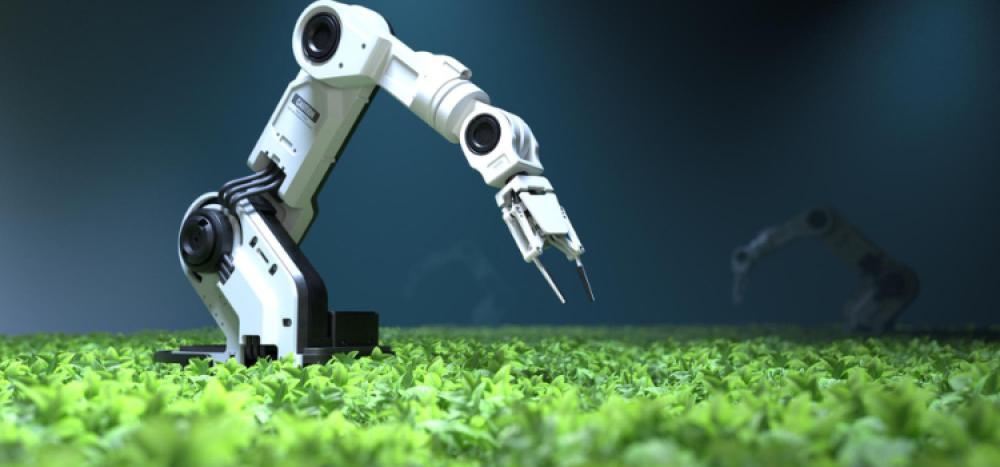
「 ✦ Content ✦ 」
This article looks at AI's involvement in addressing issues such as food waste, resource scarcity, and climate change. AI applications in crop health monitoring, sowing, soil evaluation, and supply chain management are highlighted, with examples from Indian agriculture, such as the Ministry of Agriculture's initiatives and partnerships with Microsoft. AI benefits include higher crop quality, more efficient operations, and advanced problem-solving capabilities. However, issues such limited access to technology, data requirements, and cost-effectiveness persist. The piece also looks at AI-driven start-ups such as Blue River Technology, Harvest CROO Robotics, and Gobasco, which offer new agricultural optimization solutions.
Keywords: AI, Agriculture, Machine Learning, Smart Farming
Introduction
In the current world, Human labour in agriculture is being enhanced by artificial intelligence. This change in the concept from traditional farming to the use of technology has boosted productivity and efficiency. The direct use of AI has the ability to change the traditional farming methods. These technologies are capable of addressing critical issues like food wastage, resource scarcity, environmental change all of these are essential for ensuing food security. By using Ai farmers can improve crop quality and achieve more with less resources.
AI is integrated into various sectors of agriculture such as gene sequencing, IoT networks that gather data via sensors and image recognition systems that assesses and grade crops and various commodities. AI can also predict potential challenges such as market fluctuations, sub- optimal pesticide use, irregular irrigation and deteriorating soil health. The changing climate leads to a pressure on the supply chains and affecting the quality of the food systems and societal inequalities. The Food and Agriculture Organization (FAO) poses that by 2050 the population will increase to around 10 billion and there will be a rise in 70% of the food demand.
AI in Indian Agriculture
The Ministry of Agriculture and Farmers Welfare in India has released a press report on the use of AI to tackle problems in agriculture. The Ministry has employed AI methods to address various challenges in the agricultural sectors to aid farmers. There are a few initiatives such as “Kisan e- Mitra '' an ai powered chatbot to assist farmers with queries about various schemes. This supports multiple languages and is evolving to assist with other government programs. “The National Pest Surveillance System '' for tackling the loss of produce due to climate changes. This system detects crop issues, enabling timely interventions for healthier crops. AI based analytics for taking field photographs for crop health assessment and crop health monitoring using satellite.
Artificial intelligence has the potential to address some of the most difficult problems in modern agriculture. AI-powered robots can offer farmers with critical information on soil quality, optimal planting times, and the best herbicide application areas. Computer vision, artificial intelligence, and machine learning advancements have enabled the development and application of remote sensing systems for detecting and managing plants, weeds, pests, and diseases. These artificial intelligence systems can help farmers improve crop quality, ensure market access, and reduce waste. Key areas where AI is being used in Indian agriculture are:
Crop Health Monitoring
Crops may be monitored completely using remote sensing data, high-resolution weather data, and artificial intelligence technologies. AI platforms give farmers with extra insights when needed, resulting in increased profitability and stability for the agricultural community.Sowing Applications for Farmers
Microsoft India and ICRISAT have created a sowing application for farmers that includes a customized village guidance dashboard for Andhra Pradesh. This program advises farmers on the optimal time to sow crops based on weather, soil, and other factors. By providing powerful cloud-based predictive analytics, the app provides farmers with critical knowledge and insights to reduce crop failure and boost output, lowering stress and improving income.Soil Health Monitoring
Image recognition and deep learning algorithms have enabled distributed soil health monitoring, eliminating the requirement for laboratory testing equipment. AI systems, along with data signals from faraway satellites and local picture capture, enable farmers to swiftly take action to improve soil health.Agricultural Robotics and Drones
As labor shortages and the need to feed a rising population rise, agricultural robotics (Agribots) are becoming more popular. Agribots automate tasks, increasing production efficiency while decreasing reliance on human labor. Drones equipped with multispectral and photographic sensors can monitor plant growth, detect agricultural stress, and forecast yields. Advanced drones may also carry payloads like herbicides, fertilizers, and water.Robot Drone Tractors
These robots calculate the best planting areas, harvesting periods, and routes through agriculture. They want to reduce the usage of pesticides, fertilizers, water, and insecticides.Supply chain efficiencies
AI helps farmers analyze market demand, consumer preferences, and seasonality. AI-powered supply chains can boost profits by lowering the expenses associated with managing scattered logistics and many middlemen. Small farmers can better plan their market routes, delivering perishable items faster while reducing waste and losses.Government of Karnataka signs MoU with Microsoft
The Karnataka government and Microsoft Corporation India Private Limited have signed an agreement to empower smallholder farmers with AI-based solutions. This collaboration intends to help farmers enhance their profitability by leveraging machine learning, cloud-based technology, and advanced analytics. Microsoft is working on a multivariate agricultural commodity price forecasting model that takes into account elements including planting area, production time, and weather data.
Advantages of using AI in Agriculture
AI in agriculture provides farmers with valuable data insights such as precipitation, temperature, wind speed, and solar radiation.
Efficiency: AI provides more efficient ways to raise, harvest, and market crops, increasing overall productivity.
Crop Health: AI focuses on recognizing defective crops and increasing the possibility for healthy crop output.
Business Operations: AI boosts agro-based firms by allowing for more efficient operations.
Automation: Machine learning and artificial intelligence are utilized in applications such as automatic machine adjustments for weather forecasting, disease or pest detection.
Problem Solving: AI solutions have the potential to handle major concerns for farmers, such as climatic variability and pest and weed infestations, which diminish yields.
Disadvantages of using AI in Agriculture
AI adoption challenges include limited access to high-tech machine learning techniques and a focus on agriculture items such as seeds, fertilizers, and insecticides over in-field solutions.
Data Requirements: AI systems need a lot of data to train algorithms and make accurate predictions. Collecting temporal data for broad agricultural regions is difficult, although geographical data collecting is easier.
Development Time: Developing effective machine learning models takes time since data infrastructure needs to mature. This adds to agriculture remaining in its early stages in terms of AI directing farmer decision-making and making independent assessments and estimates.
Resilience and adaptability: AI solutions must be resilient in order to explore a wide range of agricultural applications. They must adapt to environmental changes, enable real-time decision-making, and use the proper platform to acquire relevant data.
Cost-Effectiveness: For AI technology to be accessible at the farm level, solutions must become more cost-effective in order to gain wider adoption.
AI Start-ups in Agriculture
Blue River Technologies
Blue River Technology uses artificial intelligence, robots, and computer vision to cut expenses and reduce pesticide use. The computer vision system identifies each plant separately, and machine learning algorithms determine how to examine its attributes. This enables the robot to intelligently operate agricultural equipment and carry out the appropriate tasks.
Harvest CROO Robotics.
Harvest CROO Robotics has created a robotic strawberry harvesting system that uses AI and machine vision to locate and identify ripe berries for gathering. Strawberry farmers confront a significant labor shortage, which raises crop expenses and increases the danger of under harvesting. The use of artificial intelligence and the development of automated harvesting techniques will eliminate the need for manual labor, lower harvesting costs, and improve overall competition.
Gobasco
Gobasco is an AI-powered tool that helps agricultural firms anticipate production and optimize procurement. The platform intends to improve India's agricultural supply chain by combining AI and big data. This method provides farmers and agricultural SMEs with a network and platform rich in data-driven technology, enhancing their earnings and providing new possibilities.
Conclusion
The use of artificial intelligence (AI) in agriculture is changing traditional farming practices in India by increasing production, efficiency, and sustainability. AI addresses crucial challenges such as food waste, resource scarcity, and climate change, all of which are critical to maintaining food security in the face of rising global demand. With applications ranging from crop health monitoring and soil evaluation to supply chain management and robotics, AI provides farmers with useful insights and solutions that improve crop quality and operational efficiency.
Government initiatives, such as those launched by the Ministry of Agriculture, as well as partnerships with technology companies such as Microsoft, are promoting AI use in Indian agriculture. These projects provide farmers with modern technologies and data-driven methods to improve farming techniques and increase profitability.


