
Curfew Imposed in Balasore, Odisha Amid Escalating Communal Tensions
Category: Criminal Law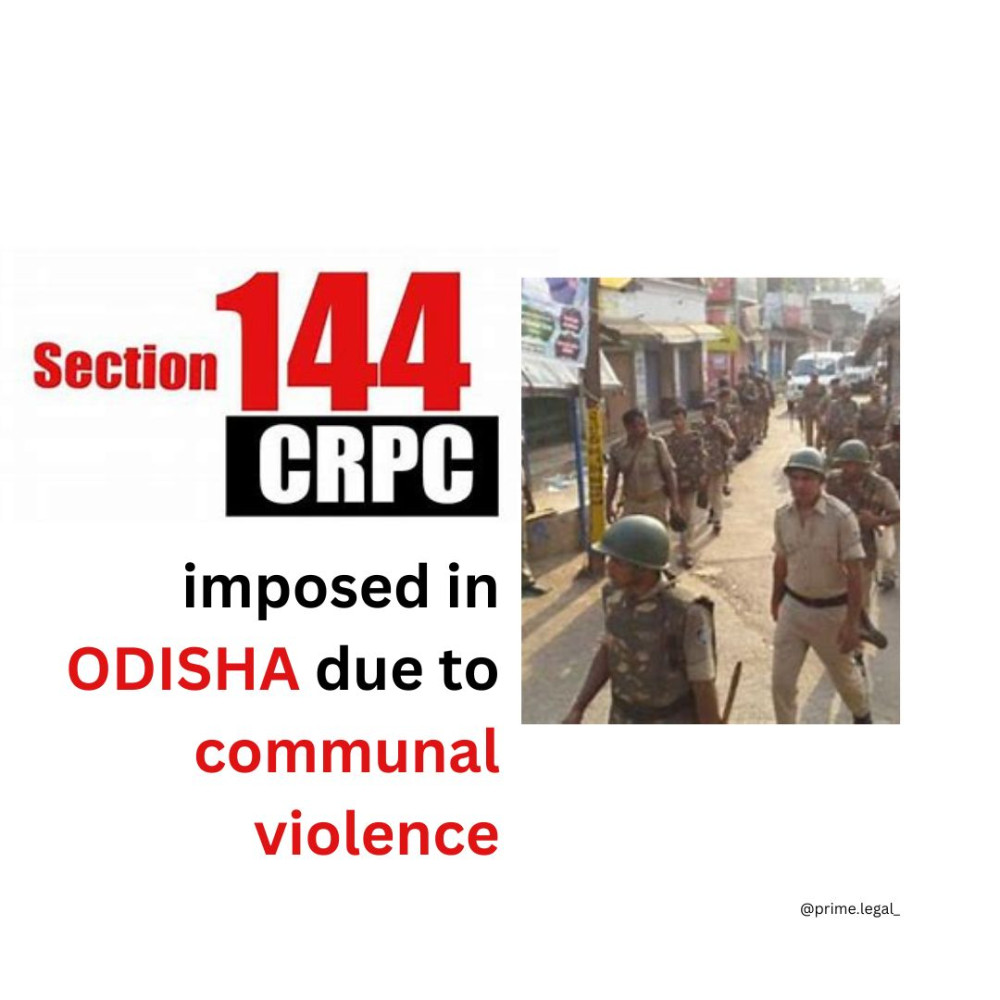
「 ✦ Content ✦ 」
The unrest, which began on Monday, was triggered by allegations of cow slaughter during a religious celebration by a minority community, a deeply contentious issue that has often been a flashpoint for communal unrest in various parts of the country.
According to reports, the initial clashes broke out in the Bhujakhia Pir area when a group protesting the suspected presence of animal sacrifice blood on the roads clashed with an opposing group. What began as a verbal altercation quickly escalated into a violent confrontation, with both sides resorting to stone-pelting, arson, and vandalism.
Scenes of chaos unfolded as armed mobs from both communities took to the streets, targeting homes, vehicles, and public property with stones, sticks, and glass bottles. The situation rapidly spiralled out of control, with reports of fires being set and houses being ransacked in various parts of the town.
Authorities’ Response and Imposition of Curfew
In an effort to quell the violence, the police initially resorted to baton charges and invoked Section 144 of the Criminal Procedure Code, which prohibits unlawful assemblies. However, these measures proved insufficient as the clashes continued to escalate late into Monday night, with mob attacks being reported in areas like Golapokhari, Motiganj, and Cinema Chhak.
Faced with a rapidly deteriorating situation, the district administration took the unprecedented step of imposing an indefinite curfew from midnight of June 17 to midnight of June 18. The curfew restricts all movement within the town, except for emergency medical aid, in an attempt to prevent further violence and allow law enforcement agencies to regain control.
Additionally, the state government has ordered the suspension of internet services in Balasore and nearby areas, a measure aimed at curbing the spread of inflammatory content and misinformation that could further exacerbate the tensions.
As of the latest reports, at least 34 individuals from both communities have been arrested in connection with the violence. The Balasore Superintendent of Police, Sagarika Nath, has stated that all commercial establishments and shops will remain closed during the curfew period, and adequate police arrangements have been made in sensitive areas.
Odisha’s Chief Minister, Mohan Charan Majhi, has condemned the violence in strong terms and assured that the state will not tolerate any disturbance to law and order. He has instructed the district authorities to take all necessary measures to restore peace and ensure the safety of citizens, regardless of their religious or community affiliations.
However, the escalating communal tensions in Balasore raise serious concerns about the potential violation of fundamental rights and the breakdown of law and order. Legal experts have called for strict enforcement of the rule of law and the protection of all citizens, emphasizing that the authorities must act impartially and without prejudice.
The imposition of curfew and the suspension of internet services, while aimed at restoring order, also raise questions about the potential infringement of civil liberties and the need for such measures to be proportionate and time bound. Human rights organizations and civil society groups have urged the authorities to ensure that these measures are lifted as soon as the situation is brought under control.
Addressing the Root Causes and Promoting Reconciliation
While the immediate priority for the authorities is to quell the violence and restore order, legal experts and civil society groups have stressed the importance of addressing the root causes of the communal tensions in Balasore. They have called for dialogue and reconciliation efforts to be initiated, involving community leaders, religious figures, and local stakeholders, to promote understanding and prevent further polarization.
Moreover, there have been calls for a thorough and impartial investigation into the incidents of violence, with those found responsible being held accountable through fair and transparent legal proceedings. This, it is argued, is crucial not only to ensure justice for the victims but also to send a strong message that such acts of communal violence will not be tolerated under any circumstances.
As the situation in Balasore remains volatile, all stakeholders – from the authorities to civil society organizations and community leaders – must work together to uphold the principles of secularism, promote communal harmony, and ensure the protection of fundamental rights and the rule of law. Only through concerted efforts and a commitment to addressing the underlying issues can the cycle of violence be broken, and lasting peace be achieved in the coastal town and across Odisha.
Written by Maria Therese Syriac.


