
COPYRIGHT ISSUES VIS-A-VIS TATTOOS OR OTHER FORMS OF BODY ART; LACUNAE IN INDIAN LAWS IN LIGHT OF JUDICIAL PRONOUNCEMENTS REGARDING THE SAME IN THE USA
Category: ARTICLE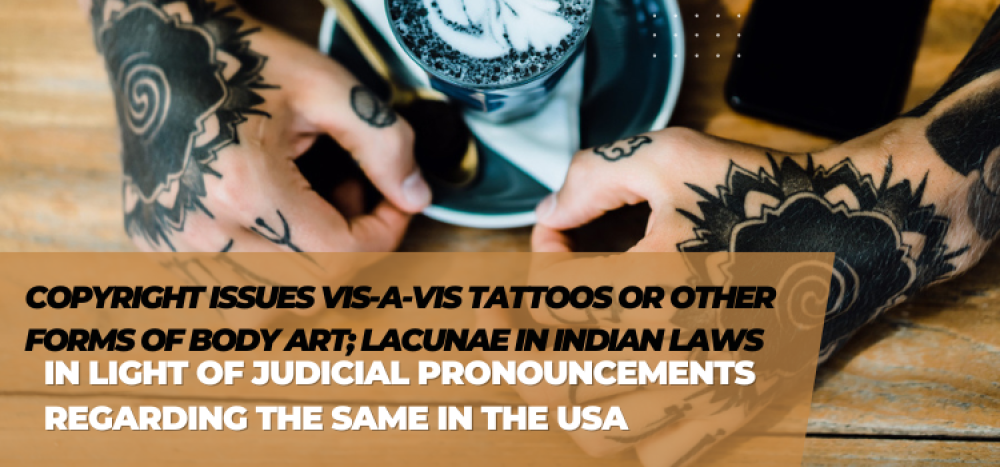
「 ✦ Content ✦ 」
While the United States has seen judicial rulings develop these areas significantly, Indian law in this regard is undeveloped. It examines the copyright challenges posed by tattoos and body art, analyzes the gaps in Indian law, and then compares them with the existing legal precedents in the United States. Through an analysis of the leading cases, the article argues for possible legal reforms to cover these lacunae so that the rights of tattoo artists are duly balanced with those of individuals.
Keywords: Tattoos, Copyright, Body Art, Indian Law, U.S. Judicial Pronouncements
INTRODUCTION
From simple body markings to sophisticated paintings, tattooing has been an integral part of human culture since time immemorial and is considered one of the primary mediums for expressing identity, self-expression, and art. With commercialization ever on the rise, several legal issues have popped up in these artistic works, especially in the case of copyright. These raise questions pertaining to ownership, infringement, and rights associated with such creations upon legal recognition of tattoos as copyrighted works. The present article examines copyright issues with tattoos and body art against the backdrop of loopholes in Indian law, with insights drawn from various judicial pronouncements in the United States.
COPYRIGHT ISSUES IN BODY ART AND TATTOOS
Since a tattoo is the product of an artist, it can fit within the definition of an "original work of authorship" under copyright law, and thus the tattoo artist would own the copyright to his or her designs. But application of copyright law to tattoos is not, in fact, so cut and dried, given the medium of expression—the human body.
1. Ownership and Licensing: First, and of foremost importance is the question of the ownership of copyright in a tattoo. Even in this case, when an artist develops a design, it gets permanently fixed on the body of his client. This unique nature complicates the traditional understanding of ownership and licensing. For instance, in some cases, rows have erupted when persons having tattoos appeared in the media, giving rise to probable claims of copyright infringement by artists.
2. Moral Rights: A further significant consideration has to be the moral rights of tattoo artists. These rights also embody the artist's right to object to mutilation or modification of their work. It does, however, make it hard to balance such rights with the autonomy of the individual over their body when the canvas is the body.
3. Infringement and Remedies: The infringement in the context of tattoos would have to be determined with regard to whether such reproduction, at the when the display of this tattooed image infringes the copyright of the artist. Remedies available in such cases are also unclear, particularly in India, due to lack of provisions to that effect in the law.
LACUANE IN INDIAN LAW
The law of copyright in India, while outlined by the Copyright Act, 1957, does not mention specific problems that tattoos and body art raise. A few of the major chinks in the armor of the Indian legal framework have been stated hereinbelow:
1. Lack of Specific Provisions: The provisions relating to tattoo and body art infringement are not particularly provided for under the Indian Copyright Act. This ambiguity remains as to the rights of tattoo artists over their works.
2. Moral Rights and Bodily Autonomy: Although Indian law does recognize moral rights, including the right to protect the integrity of a work, it fails to provide any clear guideline regarding the application of these rights in instances where the work is affixed to the person's body. One major challenge that will have to be faced will be balancing the rights of the artist with the individual's right to bodily autonomy.
3. Judicial Precedents: Unlike in the United States, there are no direct judicial precedents in India relating to tattoo and copyright issues. This simply means the lack of case law leaves courts without guidance in dispute resolution within this area.
JUDICIAL PRONOUCEMENTS IN THE UNITED STATES
It is the USA that has been the leader in replying to these questions, some high profile cases beginning to put parts of this murky area of copyright law into better focus when applied to tattoos.
1.Reed v. Nike, Inc. (2013): Tattoo artist Matthew Reed sued Nike after they used one of his tattoos for an NBA basketball player, Rasheed Wallace, for a commercial advertisement without his permission. The court ruled in Reed's favor, holding the tattoo was copyrighted, and Reed owned the copyright.
2.Whitmill v. Warner Bros. Entertainment Inc. (2011): This lawsuit was filed by tattoo artist S. Victor Whitmill, the creator of Mike Tyson's famous facial tattoo. Whitmill sued Warner Bros. after the company featured the tattoo in its movie "The Hangover Part II" without Whitmill's specific permission or compensation. The court subsequently issued an injunction in Whitmill's favor, but a settlement was out of court. This case raised the specter of possible copyright infringement in the context of tattoos on commercial media.
3.Solid Oak Sketches v. 2K Games, Inc. (2016): This case involves the creators of tattoos that several NBA players, including LeBron James, sport, suing 2K Games for showcasing the tattoos in the "NBA 2K" video game. The judge found the tattoos to be copyrightable but ultimately held that they were de minimis in terms of usage in the game, meaning the minor usage cannot support a claim. This development raises questions about the breadth of protected copyright for tattoos in digital simulations.
CONCLUSION
The intersection of copyright and tattoos is a complex legal issue. While the United States has had considerable judicial engagement with such issues, India has not matched up to these with corresponding developments in its copyright law, which is particularly unequipped to deal with new challenges raised by tattoos and body art. Amendments in the law by the legislature and judicial interpretation are long overdue in protecting the rights of tattoo artists and those who sport them. As tattoos gain popularity in the belly of India, the need for legal clarity will only increase, making it imperative that the Indian legal system addresses these issues before they balloon into proportions that are impossible to handle.
OLQ is a Pan-India basis law firm connecting legal expertise nationwide.
WRITTEN BY: PAYAL DEVNANI
GUIDED BY: ADVOCATE ANIK


