
Birth registration can't be denied to children from invalid marriage: Himachal Pradesh High Court
Category: Civil Law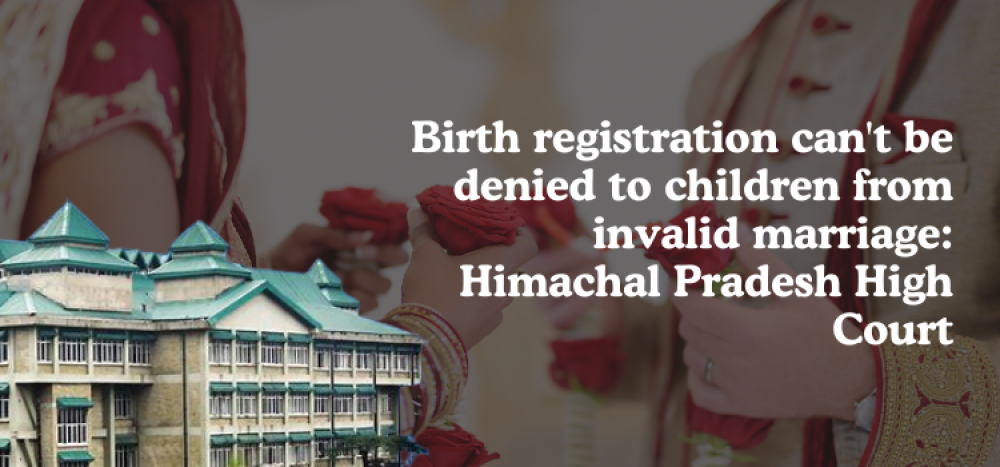
「 ✦ Content ✦ 」
Introduction
The Himachal Pradesh High Court recently ruled that birth registration cannot be denied to children born from invalid marriages. This decision emphasizes that all children, regardless of the marital status of their parents, are entitled to equal rights and protections under the law.
Background
The case arose from a petition by a mother seeking birth registration for her three children, who were born to parents living as husband and wife since 2011. However, the marriage was considered invalid as the father was already married and was unregistrable under the Special Marriage Act, 1954. The court had to examine whether the denial of birth registration was justified based on the invalidity of the parents' marriage. In particular, Section 4(a) of the Special Marriage Act provides that a marriage shall be void if, at the time of the marriage the other party has a spouse living. Local Panchayat authorities, however, said that although birth registrations were governed under Rule 21 of the Himachal Pradesh Panchayati Raj General Rules, 1997, the provision does not have any restriction to register a child born out of an unregistered or invalid marriage. They said the children could not register their births because their parents are not married. The petitioner’s legal representation argue that registering the children is their right and not doing so violated their right to identity and documentation.
Key Aspects
Equal Rights for Children: The court stated that denying birth registration based on the invalidity of a marriage amounts to discrimination and violates the rights of children. The petitioners cited Section 16(3) of the Hindu Marriage Act, 1955, which provides legitimacy to children born out from void or voidable marriages. They contended that the said provision must protect the right of the children regardless of the marriage status of the parents. All children, including those born from unregistered or legally invalid marriages, should have access to birth registration.
Legal Precedent: This ruling sets a significant legal precedent by reinforcing that children's rights must be upheld irrespective of their parents' marital status. The court noted that children should not be treated differently and that the law does not allow for such practices.
Implications for Birth Registration: The judgment clarifies that administrative authorities must ensure that all children receive birth certificates, which are crucial for accessing various rights and services, including education and healthcare.
Conclusion
Presiding over the case, Justice Jyotsna Rewal Dua observed that right to identity and documentation is fundamental especially for a child and even if the parents lack legal rights, this should not come in the way of a child having a legal identity. Justice Dua ordered that the names of the children be entered into the Birth Register and the Pariwar Register within a period of five weeks, reiterating that all children must get recognition and protection under law, regardless of the marital status of their parents. The judgment sets an important precedent with respect to protection of child rights in similar matters across the country.


